

-Photoroom.jpg)

Midnight In The Garden
Some gardens bloom only for the brokenhearted. Behind rusted gates and trailing moss, something waits beneath the moonlight—watchful, rooted, and impossibly alive. Midnight in the Garden is no myth; it is a threshold dressed in blossoms and silence, where grief becomes ritual and secrets grow deep. Come softly, with reverence and sorrow, and the garden may open to you. But bring only truth—because she is still there. And she remembers.
Scent Profile
Top: Pear, Agave
Heart: Rose, Marine, Cherry Blossom
Base: Powder, Dark Musk, Amber
Scent Profile
Top: Pear, Agave
Heart: Rose, Marine, Cherry Blossom
Base: Powder, Dark Musk, Amber
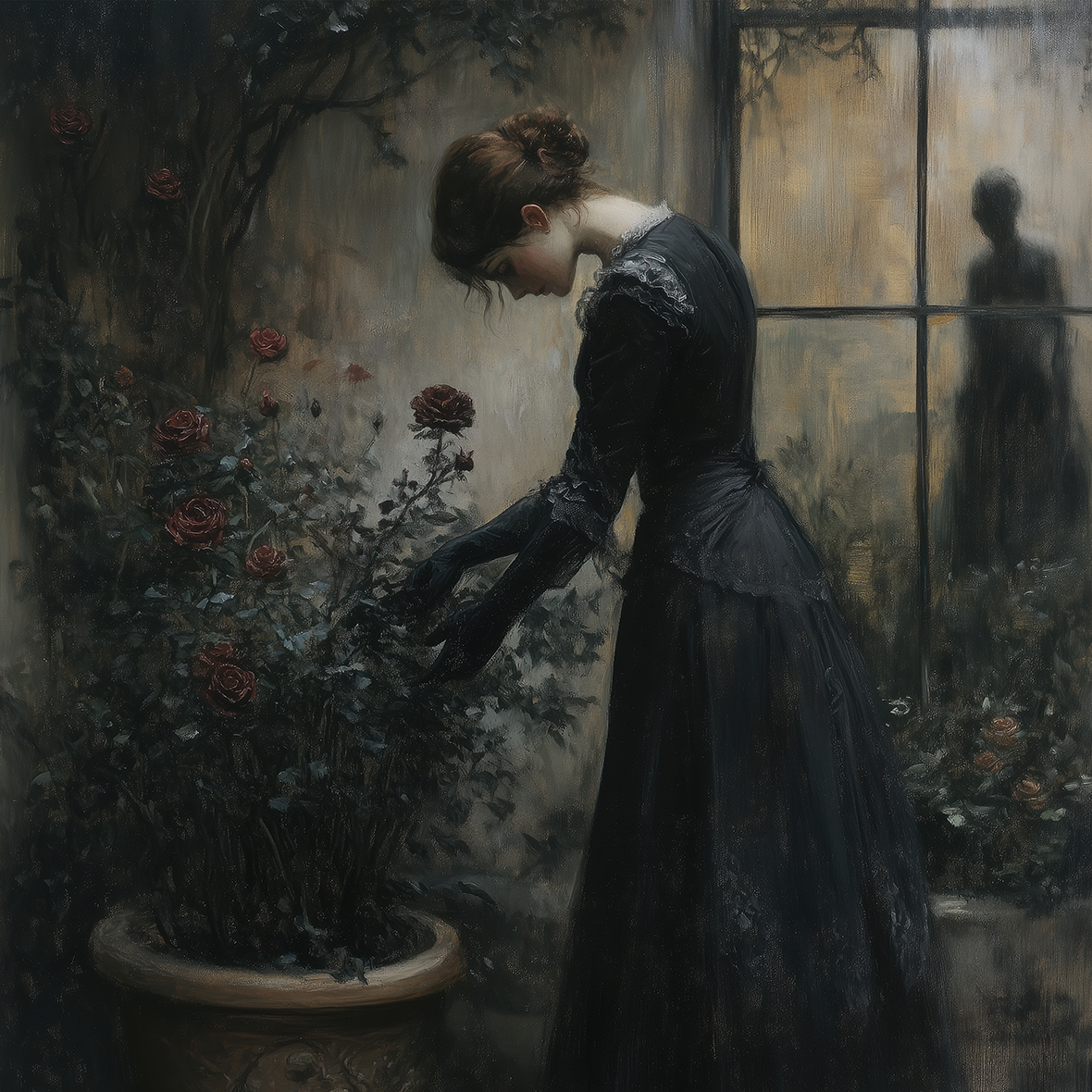
Midnight in the Garden
Some doors open only after dark.
Charleston wears its beauty like a veil—lace worked and lovely but heavy with history. Beneath the Spanish moss and sweeping porches, the city murmurs with stories, and some of them are not yet done being told. This is a place where gas lamps flicker long past midnight, where cobblestones remember footsteps from another century, and where the scent of wisteria can change into something stranger on a humid breeze.
Tucked behind a rusted iron gate on the edge of the city's oldest district, there is a garden few speak of, and fewer still visit. Locals call it The Midnight Garden, though no map bears its name. A sliver of overgrown cemetery and cultivated ruin, it lies hidden among the bones of an abandoned estate said to have belonged to the Blackwell family—a proud lineage all but erased from Charleston's society pages after a chain of strange tragedies unfolded in the late 1830s.
The land is said to be cursed and or blessed. It depends on who you ask.
In 1829, the youngest daughter of the Blackwell line, Josephine, returned from a grand tour of Europe with strange habits and even stranger luggage. She had traveled alone—highly improper for a woman of her standing—and when asked of her adventures, she'd offer only a quiet smile and the phrase, "The moonlight is different there." She kept odd hours. Planted herbs no one recognized. Read books in a language none of the household staff could place.
She also began building the garden.
It wasn't just a garden in the usual sense—it was a place of symmetry and silence, ringed with ironwork shaped like coiled vines and serpents, filled with moonflowers, black hellebore, bleeding hearts, and lilies that bloomed only after dusk. At its center stood an old marble statue of an angel with one hand raised and one finger to her lips as though keeping a secret. Some said the statue had wept one night. Others swore they saw it tilt its head as if listening.
Josephine spent most nights there, pacing between hedges, humming to herself, and sometimes laughing softly at things unseen. Her father, a rigid man concerned with appearances, tried to put an end to it. Each time he ordered the garden destroyed, something would go awry—a gardener would fall ill, a storm would delay the work, or a fire would start in the tool shed. After the third attempt, he stopped trying.
And then the deaths began.
Her older brother, William, was the first. A healthy young man with a sharp mind and cruel temper, he was found face down in the reflecting pool at the garden's edge. No mark upon him. His expression oddly peaceful. Then, the governess was found wandering barefoot through the hedges at dawn, murmuring prayers and weeping blood. She vanished the next night without a trace.
Josephine remained calm through it all. She wore mourning lace for William but never cried. She continued tending the garden, pruning roses that bloomed out of season, whispering Latin into the soil. The staff avoided her entirely. Servants left the estate in the dead of night. Some claimed they heard singing that came from beneath the garden itself.
One spring night, a suitor came calling. Elias Channing, son of a wealthy shipping magnate, had heard rumors of the mysterious Blackwell girl and was determined to meet her. He charmed her father at dinner and impressed the guests with poetry and wit. Josephine watched from the staircase, silent as the grave.
That night, she invited him to walk the garden by moonlight—only him.He did not return.When questioned, Josephine simply said, "The garden gives back what you offer. He gave only falsehoods."
Within weeks, the estate was shuttered. The remaining family fled to Europe, and the land fell into disrepair. Yet the garden remained. Untouched. Unchanged. And Josephine? She was never seen again—at least not by anyone who would speak of it.
But the flowers kept blooming.If you go there, past the cracked gate and the leaning mausoleum, you'll find the garden still pulsing with unnatural life. The lilies are always fresh. The moonflowers open even when the sky is cloudy. And sometimes, if you stand still long enough, you'll hear the soft rustle of skirts, the metallic clink of a trowel in damp earth.
Some say Josephine never died. Others claim she became part of the land—its protector, its prisoner, its queen.
Children whisper stories about her: the Lady of the Garden, the Silent Bride, the Midnight Watcher. They say if you leave a flower from your own garden at the angel's feet, she will keep your secrets safe. But if you come with cruelty or greed in your heart, she will know.
She always knows.
One modern tale comes from a college student named Amelia, who tried to debunk the legend for a folklore thesis. She entered the garden at midnight on the full moon, equipped with cameras, incense, and bravado. She left her offering—a single dandelion—and scoffed at the silence.
Her footage was found days later. The screen showed her laughing at shadows. Then, she turned suddenly toward something offscreen and whispered, "I see her now." The tape ends in static.
Amelia was found in her dorm, shivering and silent. Her hair had turned white. Her eyes refused to open. When asked, she murmured only one phrase: "She blooms where no light touches."
Another tale concerns a young professor named Miles Harrow. Fascinated by Amelia's case, he compiled historical records of the Blackwells, visited archives, and cross-referenced family Bibles to gain a deeper understanding. He never intended to go to the garden—until he received a letter in handwriting that matched Josephine's from a museum exhibit, containing only a pressed lily and a time.
Miles returned the next morning, pale and trembling, the buttons of his coat misaligned, as though he'd dressed in the dark. His notes were illegible, the pages scrawled with looping phrases: "The roots remember." "The soil listens." "Some seeds open only in silence." He withdrew from teaching and left the city. His manuscript was never finished.
To this day, the city quietly maintains the perimeter of the estate. No official records name the garden. But still, fresh flowers appear at the statue's feet—often tied with black ribbon or sealed with wax.
Those who pass by claim the air smells faintly of jasmine, even in winter. Others have heard a lullaby playing from nowhere. Some say they saw a woman in mourning dress disappearing behind the hedges; her hands cupped around something glowing.
But no one follows.
What Josephine brought back from Europe, no one can say. Some believe she returned with knowledge from ancient rites. Others say she made a bargain. Still others believe she opened something that should have stayed shut—and the garden was the only place strong enough to hold it.
Now, the garden waits.
Not for those who come seeking spectacle. Not for fools. It waits for the quiet ones. The mourners. The broken. The ones who speak kindly to dead things and feel safer in the dark. Those who understand that some doors do not open with keys but with grief.
It welcomes them.
And sometimes, it keeps them.
Charleston wears its beauty like a veil—lace worked and lovely but heavy with history. Beneath the Spanish moss and sweeping porches, the city murmurs with stories, and some of them are not yet done being told. This is a place where gas lamps flicker long past midnight, where cobblestones remember footsteps from another century, and where the scent of wisteria can change into something stranger on a humid breeze.
Tucked behind a rusted iron gate on the edge of the city's oldest district, there is a garden few speak of, and fewer still visit. Locals call it The Midnight Garden, though no map bears its name. A sliver of overgrown cemetery and cultivated ruin, it lies hidden among the bones of an abandoned estate said to have belonged to the Blackwell family—a proud lineage all but erased from Charleston's society pages after a chain of strange tragedies unfolded in the late 1830s.
The land is said to be cursed and or blessed. It depends on who you ask.
In 1829, the youngest daughter of the Blackwell line, Josephine, returned from a grand tour of Europe with strange habits and even stranger luggage. She had traveled alone—highly improper for a woman of her standing—and when asked of her adventures, she'd offer only a quiet smile and the phrase, "The moonlight is different there." She kept odd hours. Planted herbs no one recognized. Read books in a language none of the household staff could place.
She also began building the garden.
It wasn't just a garden in the usual sense—it was a place of symmetry and silence, ringed with ironwork shaped like coiled vines and serpents, filled with moonflowers, black hellebore, bleeding hearts, and lilies that bloomed only after dusk. At its center stood an old marble statue of an angel with one hand raised and one finger to her lips as though keeping a secret. Some said the statue had wept one night. Others swore they saw it tilt its head as if listening.
Josephine spent most nights there, pacing between hedges, humming to herself, and sometimes laughing softly at things unseen. Her father, a rigid man concerned with appearances, tried to put an end to it. Each time he ordered the garden destroyed, something would go awry—a gardener would fall ill, a storm would delay the work, or a fire would start in the tool shed. After the third attempt, he stopped trying.
And then the deaths began.
Her older brother, William, was the first. A healthy young man with a sharp mind and cruel temper, he was found face down in the reflecting pool at the garden's edge. No mark upon him. His expression oddly peaceful. Then, the governess was found wandering barefoot through the hedges at dawn, murmuring prayers and weeping blood. She vanished the next night without a trace.
Josephine remained calm through it all. She wore mourning lace for William but never cried. She continued tending the garden, pruning roses that bloomed out of season, whispering Latin into the soil. The staff avoided her entirely. Servants left the estate in the dead of night. Some claimed they heard singing that came from beneath the garden itself.
One spring night, a suitor came calling. Elias Channing, son of a wealthy shipping magnate, had heard rumors of the mysterious Blackwell girl and was determined to meet her. He charmed her father at dinner and impressed the guests with poetry and wit. Josephine watched from the staircase, silent as the grave.
That night, she invited him to walk the garden by moonlight—only him.He did not return.When questioned, Josephine simply said, "The garden gives back what you offer. He gave only falsehoods."
Within weeks, the estate was shuttered. The remaining family fled to Europe, and the land fell into disrepair. Yet the garden remained. Untouched. Unchanged. And Josephine? She was never seen again—at least not by anyone who would speak of it.
But the flowers kept blooming.If you go there, past the cracked gate and the leaning mausoleum, you'll find the garden still pulsing with unnatural life. The lilies are always fresh. The moonflowers open even when the sky is cloudy. And sometimes, if you stand still long enough, you'll hear the soft rustle of skirts, the metallic clink of a trowel in damp earth.
Some say Josephine never died. Others claim she became part of the land—its protector, its prisoner, its queen.
Children whisper stories about her: the Lady of the Garden, the Silent Bride, the Midnight Watcher. They say if you leave a flower from your own garden at the angel's feet, she will keep your secrets safe. But if you come with cruelty or greed in your heart, she will know.
She always knows.
One modern tale comes from a college student named Amelia, who tried to debunk the legend for a folklore thesis. She entered the garden at midnight on the full moon, equipped with cameras, incense, and bravado. She left her offering—a single dandelion—and scoffed at the silence.
Her footage was found days later. The screen showed her laughing at shadows. Then, she turned suddenly toward something offscreen and whispered, "I see her now." The tape ends in static.
Amelia was found in her dorm, shivering and silent. Her hair had turned white. Her eyes refused to open. When asked, she murmured only one phrase: "She blooms where no light touches."
Another tale concerns a young professor named Miles Harrow. Fascinated by Amelia's case, he compiled historical records of the Blackwells, visited archives, and cross-referenced family Bibles to gain a deeper understanding. He never intended to go to the garden—until he received a letter in handwriting that matched Josephine's from a museum exhibit, containing only a pressed lily and a time.
Miles returned the next morning, pale and trembling, the buttons of his coat misaligned, as though he'd dressed in the dark. His notes were illegible, the pages scrawled with looping phrases: "The roots remember." "The soil listens." "Some seeds open only in silence." He withdrew from teaching and left the city. His manuscript was never finished.
To this day, the city quietly maintains the perimeter of the estate. No official records name the garden. But still, fresh flowers appear at the statue's feet—often tied with black ribbon or sealed with wax.
Those who pass by claim the air smells faintly of jasmine, even in winter. Others have heard a lullaby playing from nowhere. Some say they saw a woman in mourning dress disappearing behind the hedges; her hands cupped around something glowing.
But no one follows.
What Josephine brought back from Europe, no one can say. Some believe she returned with knowledge from ancient rites. Others say she made a bargain. Still others believe she opened something that should have stayed shut—and the garden was the only place strong enough to hold it.
Now, the garden waits.
Not for those who come seeking spectacle. Not for fools. It waits for the quiet ones. The mourners. The broken. The ones who speak kindly to dead things and feel safer in the dark. Those who understand that some doors do not open with keys but with grief.
It welcomes them.
And sometimes, it keeps them.
